Signed in as:
filler@godaddy.com
Approaching Complex Social and Ethical Issues
The churches have sometimes had considerable difficulty in addressing certain complex social and ethical issues. One such issue is the question of globalization. Churches themselves are deeply involved in this process, for good and ill. The LWF, through materials prepared by its Department for Theology and Studies (DTS), has challenged member churches to approach this question from the perspective of communion, and has invited member churches to participate in transforming economic globalization. Another issue that has generated a lot of controversy in some societies and in some churches is the issue of homosexuality, and attitudes to homosexual persons. This is an issue that has been with humankind since time immemorial, and will continue to be so in future. It will not go away. It is a complex matter with ethical dimensions related to culture, anthropology and spirituality. There are some churches in which this issue has not been raised for discussion, others in which it has become a discussion of great controversy, and still others where it has been addressed with little or no difficulty. Since we are a communion of interdependent churches, no member church can ignore the issue, or consider it closed one way or the other while sister churches are still struggling with it. An issue of this kind requires patient discussion and prayerful reflection. This Assembly should take steps to ensure careful preparation for such discussion and reflection. I therefore propose a process of consultation, exchange, discussion and prayer, as a communion, to seek the guiding wisdom of the Holy Spirit. The new Council could be asked to bear responsibility for such a process, mandated by the Assembly, to examine this issue in a proper consultative way, utilizing the space we have for differences in viewpoint and open deliberation within our communion.
Indigenous Issues
Meeting here in Winnipeg sets us in a context in which the voices of Indigenous people—the First Nations of this land—can and should be heard. The period between the Hong Kong and Winnipeg Assemblies coincided with the UN “International Decade of the World’s Indigenous people 1995– 2004.” The concrete outcome of this observance, however, in terms of improvement for the lives of Indigenous peoples around the world is hard to discern. Several international instruments have been adopted in this area, but ratification and implementation by individual countries have not been sufficiently followed up. We must put pressure on governments to ensure such ratification and implementation. Several member churches have taken significant initiatives in this area leading to strong associations with Indigenous communities in their countries. The LWF as a whole could take a stronger lead. In the next period, I hope this can be achieved.
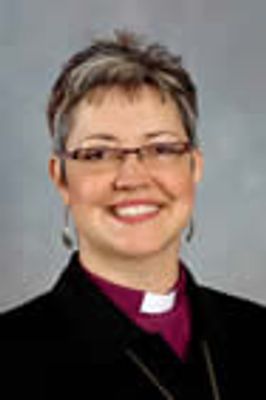
Read or Download .pdfs of Messages and Statements from the Current Bishop of the ELCIC since 2009.
Read or Download .pdfs of Articles to the Church since 2007 from the Archives of Canada Lutheran - the award-winning magazine of the ELCIC
Copyright © Remembering Today For The Church Of Tomorrow Project (Canadian Lutheran History).This site is developed with the presumption of grace. It relies on the documents of many sources and the opinions of many individuals.. Should you have concerns about any of our content please contact us.

!
This is a living archive. We count on viewers to become contributors - making the site better.